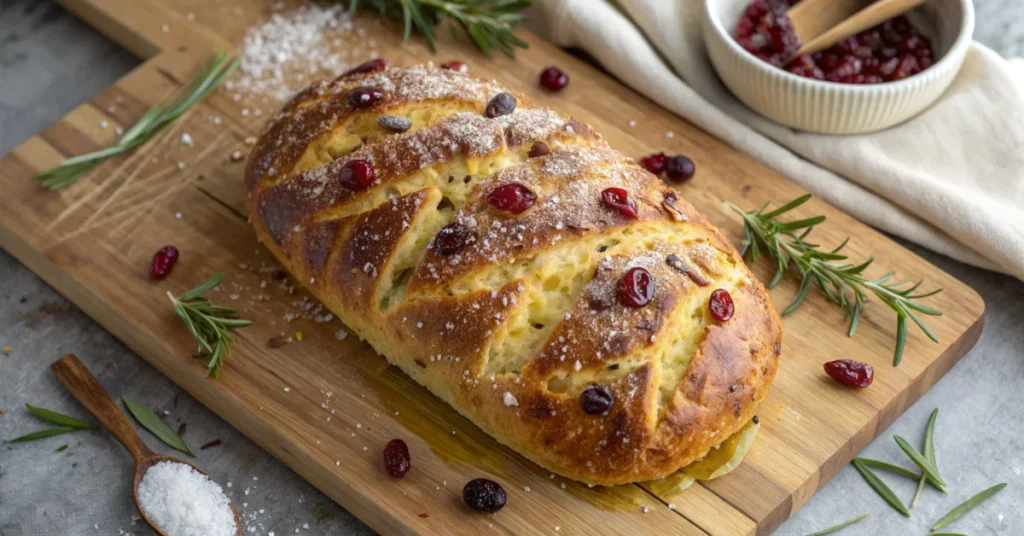
No-Knead Rosemary Cranberry Bread with Olive Oil & Sea Salt is a simple artisan-style homemade bread that requires no kneading and delivers bakery-quality results.
This recipe combines the earthy aroma of rosemary with the sweetness of cranberries, enriched with olive oil and topped with sea salt for a perfect crust.
No-Knead Rosemary Cranberry Bread with Olive Oil & Sea Salt is ideal for beginners who want a rustic, flavorful loaf with minimal effort and maximum taste.
Why You’ll Love This No-Knead Rosemary Cranberry Bread
- Minimal effort: No kneading required—the long fermentation does the work for you
- Superior flavor: Extended resting time develops complex, tangy notes that commercial yeast alone cannot achieve
- Stunning presentation: A gorgeous caramelized crust and rustic scoring make this bread a showstopper
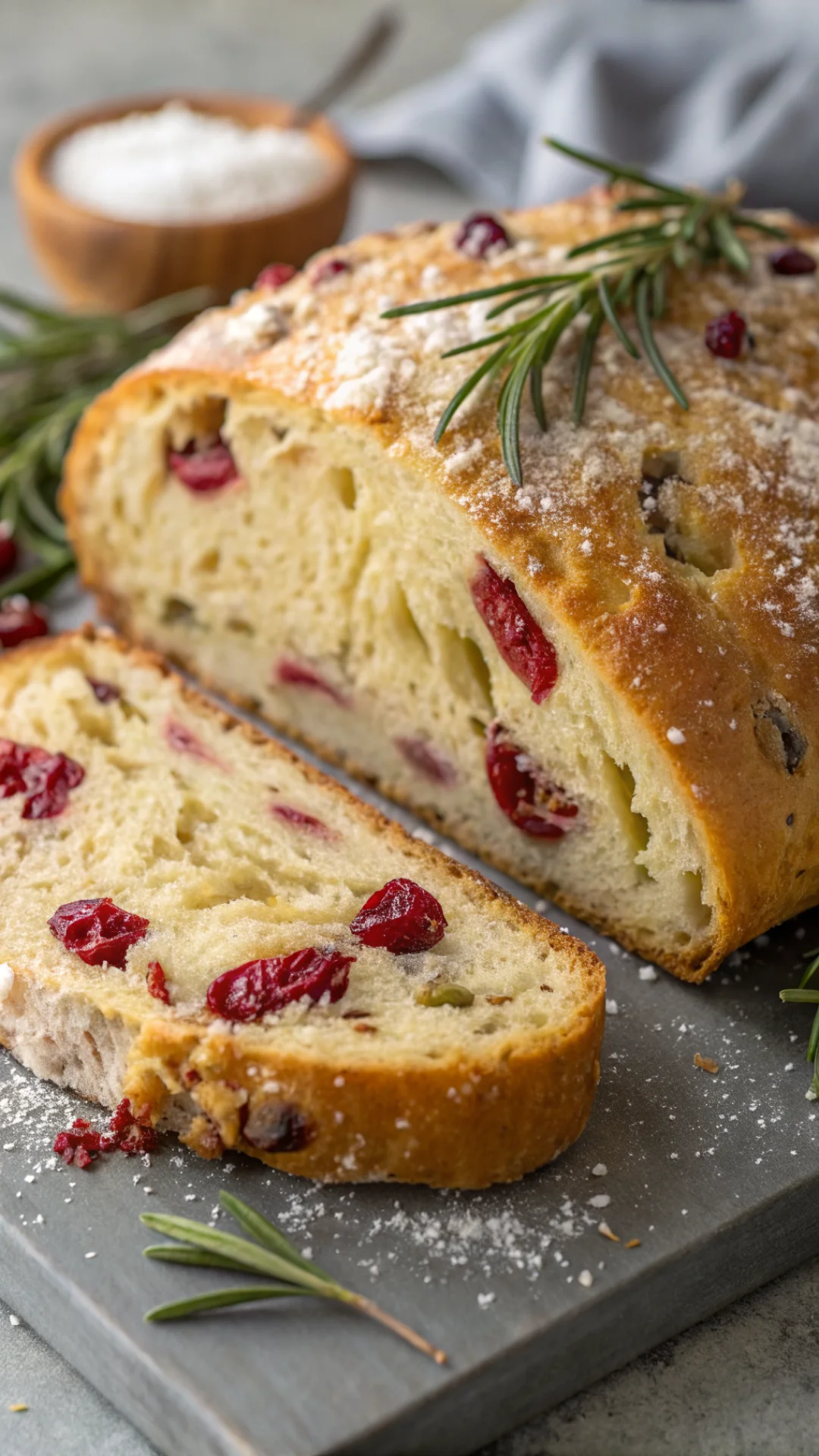
- Incredible texture: Tender crumb with a crispy exterior and beautiful open structure
- Customizable: Easily swap cranberries and rosemary for your favorite dried fruits and herbs
- Perfect timing: Mix in the evening, bake the next day—ideal for weekend baking plans
Ingredients for No-Knead Rosemary Cranberry Bread with Olive Oil & Sea Salt
| Ingredient | Amount |
|---|---|
| All-purpose or bread flour | 3 cups (420g) |
| Water, lukewarm | 1½ cups (360ml) |
| Instant yeast | ¼ teaspoon |
| Fine sea salt | 1½ teaspoons |
| Dried cranberries | ¾ cup (120g) |
| Fresh rosemary sprigs, finely chopped | 2 tablespoons |
| Extra virgin olive oil | 3 tablespoons, divided |
| Fleur de sel or sea salt (for topping) | 1 teaspoon |
How To Make No-Knead Rosemary Cranberry Bread
Combine dry ingredients: In a large mixing bowl, whisk together flour, instant yeast, and fine sea salt. This distributes the yeast and salt evenly throughout the dough.
Add water and olive oil: Pour in lukewarm water and 2 tablespoons of olive oil. Using a spoon or dough whisk, stir until a shaggy, wet dough forms. All flour should be incorporated, but the dough will be sticky and rough—this is intentional.
Fold in cranberries and rosemary: Gently fold the dried cranberries and chopped fresh rosemary into the dough using a few turns of a spatula. Be gentle to avoid crushing the cranberries.
First fermentation: Cover the bowl with plastic wrap or a damp kitchen towel. Let rest at room temperature for 12–18 hours. The dough will rise slightly and develop a pleasant sour aroma.
Shape the dough: Turn the dough onto a lightly floured surface. Using wet hands, gently shape it into a round or oval loaf by folding the edges toward the center. Don’t overwork it—you want to preserve the air bubbles. Place seam-side up in a floured banneton basket or a bowl lined with a floured kitchen towel.
Second rise: Cover loosely and let rise for 2–4 hours at room temperature, or up to 8 hours in the refrigerator (chilled dough is easier to score).
Preheat oven: About 1 hour before baking, place a Dutch oven inside your oven and preheat to 475°F (245°C).
Score the dough: Turn the risen dough onto parchment paper. Using a sharp bread knife or lame, make 2–3 confident slashes across the top for a beautiful, rustic appearance.
Bake: Carefully transfer the dough on parchment into the preheated Dutch oven. Cover with the lid and bake for 30 minutes. Remove the lid and continue baking for 15–20 minutes until the crust is deep golden brown.
Finish with olive oil and sea salt: Remove from the oven and immediately brush the hot crust with the remaining 1 tablespoon of olive oil. Sprinkle with fleur de sel while the oil is still wet, allowing it to adhere.
Cool completely: Transfer to a wire rack and let cool for at least 30 minutes before slicing. This allows the crumb to set properly.
Tips and Tricks
Hydration matters: This dough is intentionally wetter than typical bread doughs. Don’t add extra flour—the hydration creates the open crumb structure and rustic texture.
Timing flexibility: If your schedule doesn’t allow 12–18 hours, you can do a cold fermentation in the refrigerator for up to 72 hours. Cold dough is often easier to handle and has deeper flavor.
Rosemary freshness: Use fresh rosemary when possible for the most vibrant flavor. Dried rosemary can be substituted at half the amount, though the flavor will be less bright.
Cranberry alternatives: Try dried tart cherries, currants, or a mix of berries for variation. Soak dried fruit in warm water for 10 minutes before folding to plump them up.
Dutch oven essential: The Dutch oven traps steam, which creates that gorgeous crispy crust. A baking stone with a covered roasting pan works as a backup.
Room temperature matters: Warmer kitchens (75°F+) will speed fermentation; cooler kitchens may need 18–24 hours. Trust the dough’s appearance over strict timing.
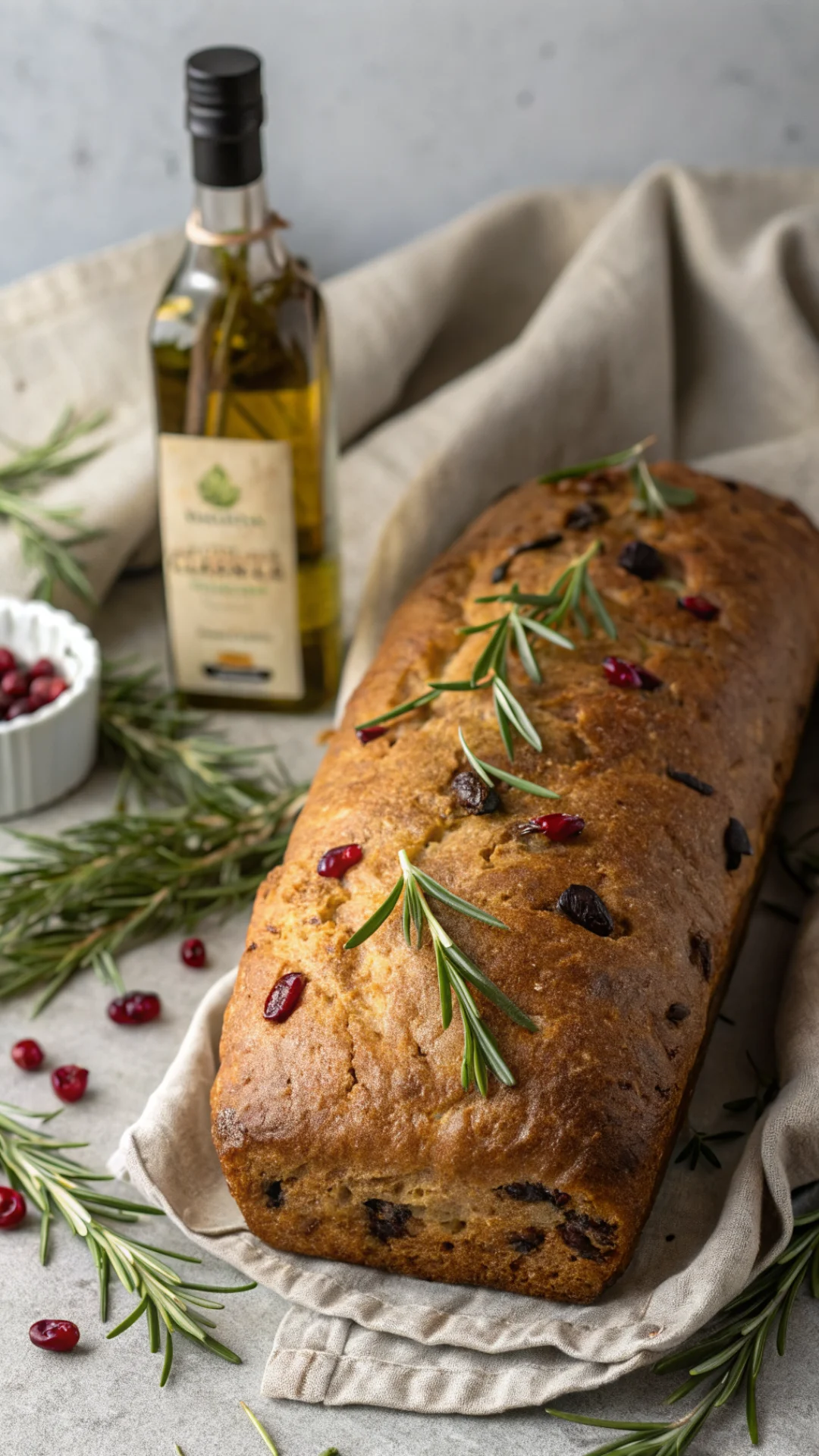
Quality olive oil: Use a good extra virgin olive oil for topping—this is where it truly shines in terms of flavor.
Delicious Variations to Try
1. Versatile Dough Variations
Once you’ve mastered the basic recipe, this dough is incredibly versatile.
2. Mediterranean Herb Twist
Try replacing the rosemary with Italian herbs like oregano and thyme, or add garlic powder and black pepper for a Mediterranean twist.
3. Greek-Inspired Flavor Option
Swap cranberries for sun-dried tomatoes and add kalamata olives for a Greek-inspired loaf that pairs beautifully with mezze boards and hummus.
4. Sweet Variation with Fruits
For a sweeter variation, use dried cherries and add a touch of honey to the dough, then top with candied rosemary and coarse sugar instead of sea salt.
5. Autumn Harvest Bread Idea
In the autumn, dried figs and walnuts with sage create a wonderful harvest-themed bread.
6. Savory Everything Bagel Version
You can even make a savory version using everything bagel seasoning, dried onions, and caraway seeds for an entirely different flavor profile.
7. Creative No-Knead Flexibility
The beauty of this no-knead method is that it accepts creative additions without affecting the ease of the process. Experiment with your favorite dried fruits, herbs, and seasonings to create signature breads that reflect your personal taste.
Frequently Asked Questions
Can I make this bread without a Dutch oven?
Yes! While a Dutch oven is ideal for trapping steam, you can achieve similar results by placing a baking stone on the lower rack and using a covered roasting pan or aluminum foil tent over your shaped dough. The crust won’t be quite as thick and crackling, but the bread will still turn out delicious.
What if my dough doesn’t rise much during fermentation?
This is common, especially in cooler kitchens. The dough may look relatively flat but still have developed plenty of flavor and air structure. Trust the process—long fermentation develops flavor through chemical changes, not just visible rise. If you’re concerned, simply extend the first fermentation by a few hours or keep the kitchen warmer.
Can I freeze this dough?
Absolutely! After the first fermentation, you can freeze the dough for up to 3 months. Shape it, wrap tightly in plastic wrap, and freeze. When ready to bake, thaw overnight in the refrigerator, then let it come to room temperature for 1–2 hours before scoring and baking. The long fermentation in the freezer actually develops even more complex flavor.
Final Thoughts
No-knead rosemary cranberry bread with olive oil and sea salt is the perfect introduction to artisan bread-making, whether you’re a complete beginner or an experienced baker looking for a fuss-free method.
With minimal hands-on time and maximum flavor, this rustic loaf proves that exceptional homemade bread doesn’t require complicated techniques or specialized equipment.
The combination of tart cranberries, aromatic rosemary, and high-quality olive oil creates a truly memorable bread that elevates simple meals and impresses dinner guests.
Once you’ve baked this stunning loaf, you’ll understand why the no-knead method has revolutionized home baking. Make it this weekend, and prepare to fall in love with your kitchen’s newest superpower.
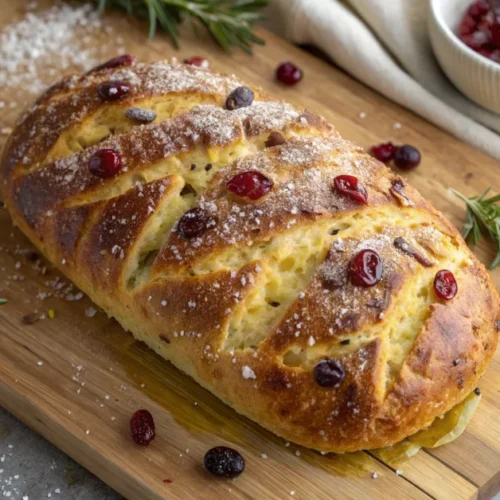
No-Knead Rosemary Cranberry Bread with Olive Oil & Sea Salt
Ingredients
- 3 cups All-purpose or bread flour 420g
- 1.5 cups Water, lukewarm 360ml
- 0.25 teaspoon Instant yeast
- 1.5 teaspoons Fine sea salt
- 0.75 cup Dried cranberries 120g
- 2 tablespoons Fresh rosemary sprigs, finely chopped
- 3 tablespoons Extra virgin olive oil divided
- 1 teaspoon Fleur de sel or sea salt for topping
Instructions
- In a large mixing bowl, whisk together flour, instant yeast, and fine sea salt to distribute ingredients evenly.
- Pour in lukewarm water and 2 tablespoons of olive oil. Stir with a spoon until a shaggy, wet dough forms with all flour incorporated.
- Gently fold the dried cranberries and chopped fresh rosemary into the dough using a spatula, being careful not to crush the berries.
- Cover the bowl with plastic wrap or a damp kitchen towel and let rest at room temperature for 12–18 hours until dough rises slightly and develops aroma.
- Turn dough onto a lightly floured surface and gently shape into a round or oval loaf, folding edges toward center while preserving air bubbles.
- Place seam-side up in a floured banneton basket or bowl lined with a floured kitchen towel. Cover loosely and let rise for 2–4 hours at room temperature or up to 8 hours refrigerated.
- About 1 hour before baking, place a Dutch oven inside your oven and preheat to 475°F (245°C).
- Turn risen dough onto parchment paper and score the top with 2–3 confident slashes using a sharp bread knife for a rustic appearance.
- Carefully transfer dough on parchment into preheated Dutch oven. Cover with lid and bake for 30 minutes.
- Remove lid and continue baking for 15–20 minutes until crust is deep golden brown.
- Remove from oven and immediately brush hot crust with remaining 1 tablespoon olive oil. Sprinkle with fleur de sel while oil is still wet.
- Transfer to a wire rack and cool completely for at least 30 minutes before slicing to allow crumb to set properly.