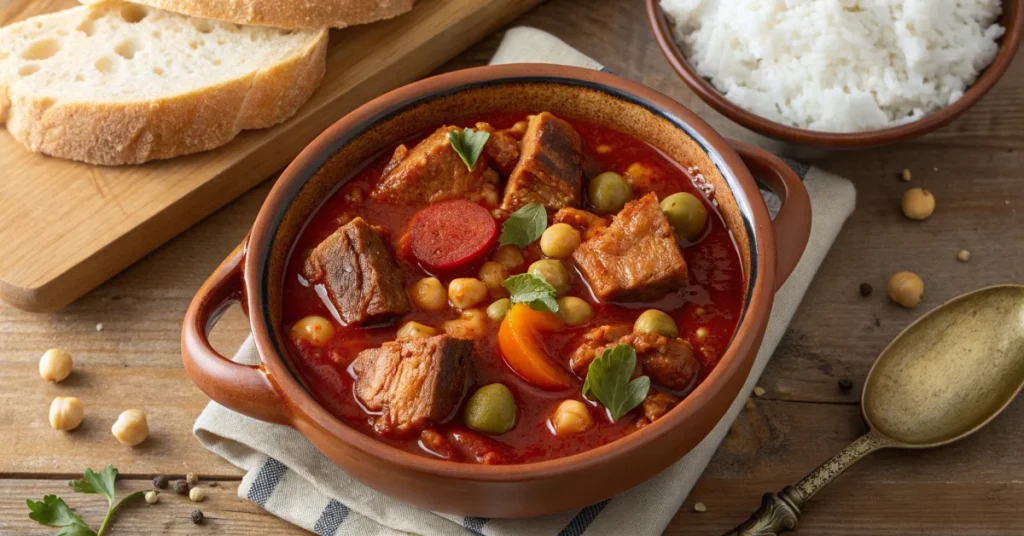
Callos Recipe Filipino is a beloved comfort food that showcases the beautiful marriage of Spanish and Filipino culinary traditions. This rich, tomato-based stew features tender beef tripe, chorizo, and chickpeas simmered in a luscious sauce that’s perfect for family gatherings or special occasions.
The dish originated from the Spanish callos a la madrileña but has been adapted by Filipino cooks to include local ingredients and flavors that make it uniquely ours.
Whether you’re preparing this for a Sunday family lunch or a festive celebration, this callos recipe will transport you straight to Filipino comfort food heaven. Serve it with warm rice or crusty bread to soak up every drop of that incredible sauce.
Ingredients for Callos Recipe Filipino
| Ingredient | Amount |
|---|---|
| Beef tripe, cleaned and cut into strips | 1 kg |
| Chorizo de Bilbao, sliced | 200 g |
| Cooked chickpeas | 1 cup |
| Tomato sauce | 2 cups |
| Red bell pepper, sliced | 1 large |
| Onion, chopped | 1 large |
| Garlic cloves, minced | 6 cloves |
| Green olives | 1/2 cup |
| Paprika | 1 tbsp |
| Bay leaves | 2 pieces |
| Beef broth | 2 cups |
| Olive oil | 3 tbsp |
| Salt and pepper | To taste |
How To Make Callos Recipe Filipino
Clean the beef tripe thoroughly by rubbing it with salt and rinsing multiple times under cold water. Cut into 2-inch strips and place in a large pot with enough water to cover. Bring to a boil, then drain. Repeat this process twice to remove any unwanted odors.
In a pressure cooker, add the cleaned tripe with fresh water, 1 bay leaf, and a pinch of salt. Cook for 45-60 minutes until tender. If not using a pressure cooker, simmer for 2-3 hours until the tripe is soft. Drain and set aside.
Heat olive oil in a large, heavy-bottomed pot over medium heat. Sauté the chorizo slices until they release their oils and become slightly crispy, about 3-4 minutes. Remove and set aside.
In the same pot with the chorizo oil, sauté the garlic until fragrant, about 30 seconds. Add the onions and cook until translucent, approximately 5 minutes.
Add the cooked tripe to the pot and stir to coat with the aromatics. Pour in the tomato sauce, beef broth, paprika, and remaining bay leaf. Stir everything together and bring to a gentle simmer.
Add the chickpeas and cooked chorizo back to the pot. Season with salt and pepper to taste. Cover and simmer on low heat for 30-40 minutes, stirring occasionally to prevent sticking.
Add the sliced red bell peppers and green olives. Continue cooking for another 10-15 minutes until the bell peppers are tender and the sauce has thickened to your desired consistency.
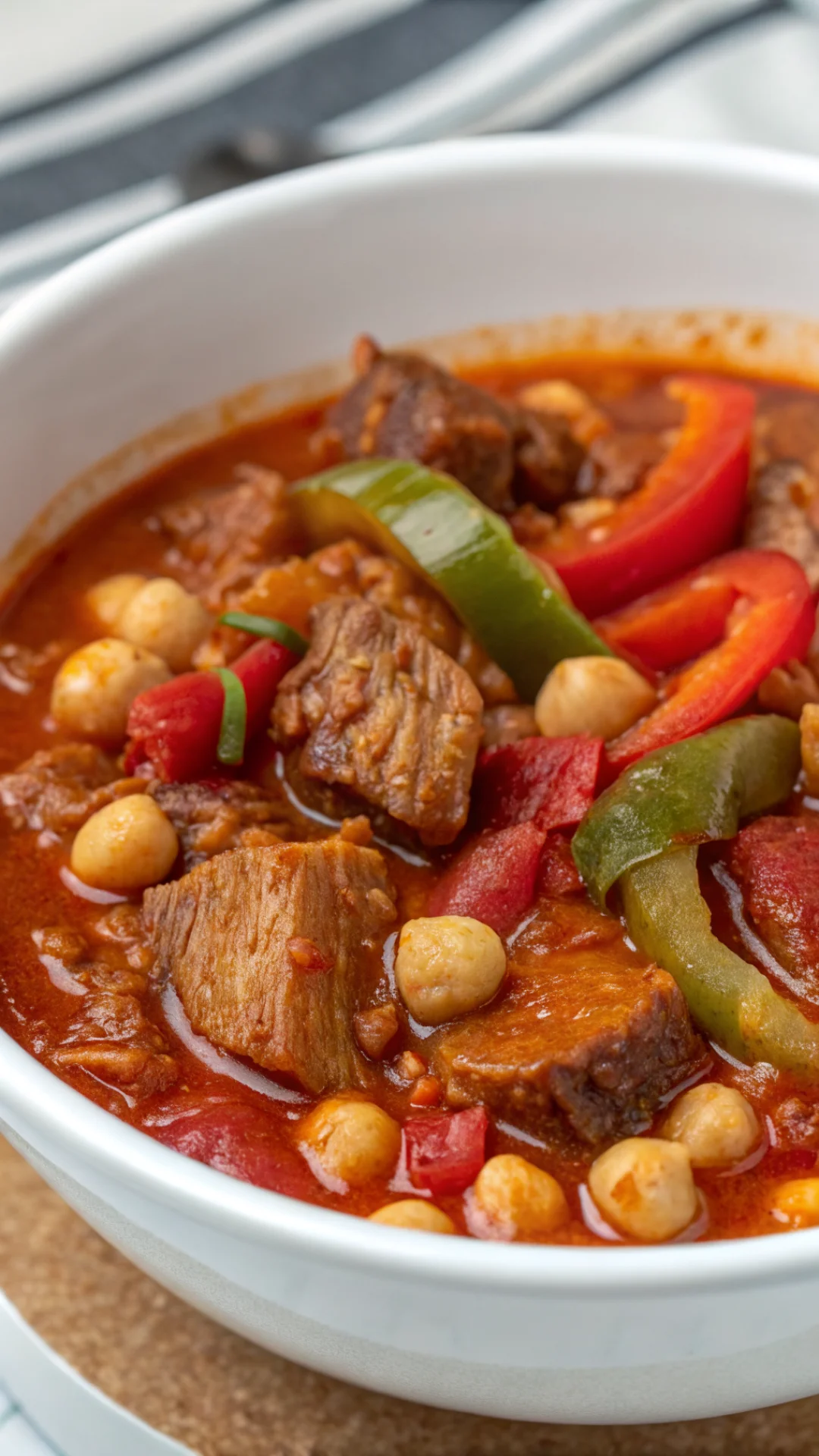
Taste and adjust seasoning as needed. Remove bay leaves before serving. The callos should have a rich, thick sauce that coats the tripe beautifully.
Tips and Tricks
- Cleaning is crucial: Properly cleaning the tripe removes any unpleasant odors. Don’t skip the boiling and draining steps—they make all the difference in the final taste.
- Use quality chorizo: Authentic Spanish chorizo de Bilbao provides the best flavor, but Filipino-style chorizo works wonderfully too.
- Low and slow: Don’t rush the simmering process. The longer the ingredients meld together, the more developed the flavors become.
- Make ahead: Callos tastes even better the next day. Prepare it a day in advance and reheat gently before serving.
- Thickness matters: If your sauce is too thin, simmer uncovered for the last 10 minutes. If too thick, add a bit more broth.
- Add heat: For those who enjoy spice, add a chopped red chili or a dash of hot sauce to give your callos an extra kick.
Delicious Variations to Try
While the traditional callos recipe is perfect as is, there are several variations you can explore. Some Filipino cooks add chunks of ham or bacon for extra meatiness, while others include sliced ham hocks for additional collagen that makes the sauce even more luxurious.
You can also add diced potatoes or carrots during the last 20 minutes of cooking for extra vegetables and to make the dish more substantial.
For a richer version, some recipes include chicken liver pate or ground liver spread, which adds an earthy depth and helps thicken the sauce naturally.
Another popular variation includes adding sausages like Vienna sausages or even hotdogs—a distinctly Filipino touch that children absolutely love. If you’re looking for a wine-infused version, add half a cup of dry white wine when you add the tomato sauce for a more sophisticated flavor profile.
Frequently Asked Questions
Can I use a different cut of meat instead of tripe?
While tripe is traditional and gives callos its distinctive texture, you can substitute with beef honeycomb tripe, ox feet, or even beef chunks. However, the cooking time and final texture will differ. Some versions also include a combination of tripe and beef shank for variety.
How long can I store leftover callos?
Leftover callos can be refrigerated in an airtight container for up to 4 days. In fact, it tastes even better after a day or two as the flavors continue to develop. You can also freeze it for up to 3 months. Thaw overnight in the refrigerator and reheat gently on the stovetop.
What should I serve with Filipino callos?
Callos is traditionally served with steamed white rice to soak up the delicious sauce. However, it also pairs wonderfully with crusty bread, garlic bread, or even over pasta for a fusion twist. Some people enjoy it with a side of green salad to balance the richness of the dish.
Final Thoughts
This Callos Recipe Filipino is a testament to how Spanish colonial influence has beautifully blended with Filipino culinary creativity.
While it requires some time and patience, the result is a deeply satisfying, restaurant-quality dish that brings warmth to any table.
Whether you’re cooking for a special occasion or simply craving something hearty and comforting, this callos will not disappoint. Give it a try, and it might just become your new favorite Filipino stew!
Callos Recipe Filipino
Ingredients
- 1 kg beef tripe cleaned and cut into strips
- 200 g chorizo de Bilbao sliced
- 1 cup cooked chickpeas
- 2 cups tomato sauce
- 1 large red bell pepper sliced
- 1 large onion chopped
- 6 cloves garlic minced
- ½ cup green olives
- 1 tbsp paprika
- 2 pieces bay leaves
- 2 cups beef broth
- 3 tbsp olive oil
- salt and pepper to taste
Instructions
- Clean the beef tripe thoroughly by rubbing it with salt and rinsing multiple times under cold water. Cut into 2-inch strips and place in a large pot with enough water to cover. Bring to a boil, then drain. Repeat this process twice to remove any unwanted odors.
- In a pressure cooker, add the cleaned tripe with fresh water, 1 bay leaf, and a pinch of salt. Cook for 45-60 minutes until tender. If not using a pressure cooker, simmer for 2-3 hours until the tripe is soft. Drain and set aside.
- Heat olive oil in a large, heavy-bottomed pot over medium heat. Sauté the chorizo slices until they release their oils and become slightly crispy, about 3-4 minutes. Remove and set aside.
- In the same pot with the chorizo oil, sauté the garlic until fragrant, about 30 seconds. Add the onions and cook until translucent, approximately 5 minutes.
- Add the cooked tripe to the pot and stir to coat with the aromatics. Pour in the tomato sauce, beef broth, paprika, and remaining bay leaf. Stir everything together and bring to a gentle simmer.
- Add the chickpeas and cooked chorizo back to the pot. Season with salt and pepper to taste. Cover and simmer on low heat for 30-40 minutes, stirring occasionally to prevent sticking.
- Add the sliced red bell peppers and green olives. Continue cooking for another 10-15 minutes until the bell peppers are tender and the sauce has thickened to your desired consistency.
- Taste and adjust seasoning as needed. Remove bay leaves before serving. The callos should have a rich, thick sauce that coats the tripe beautifully. Serve hot with steamed rice.